
The Box-to-Box Player: How Non-Dilutive Capital Covers the Whole Pitch
2 mins
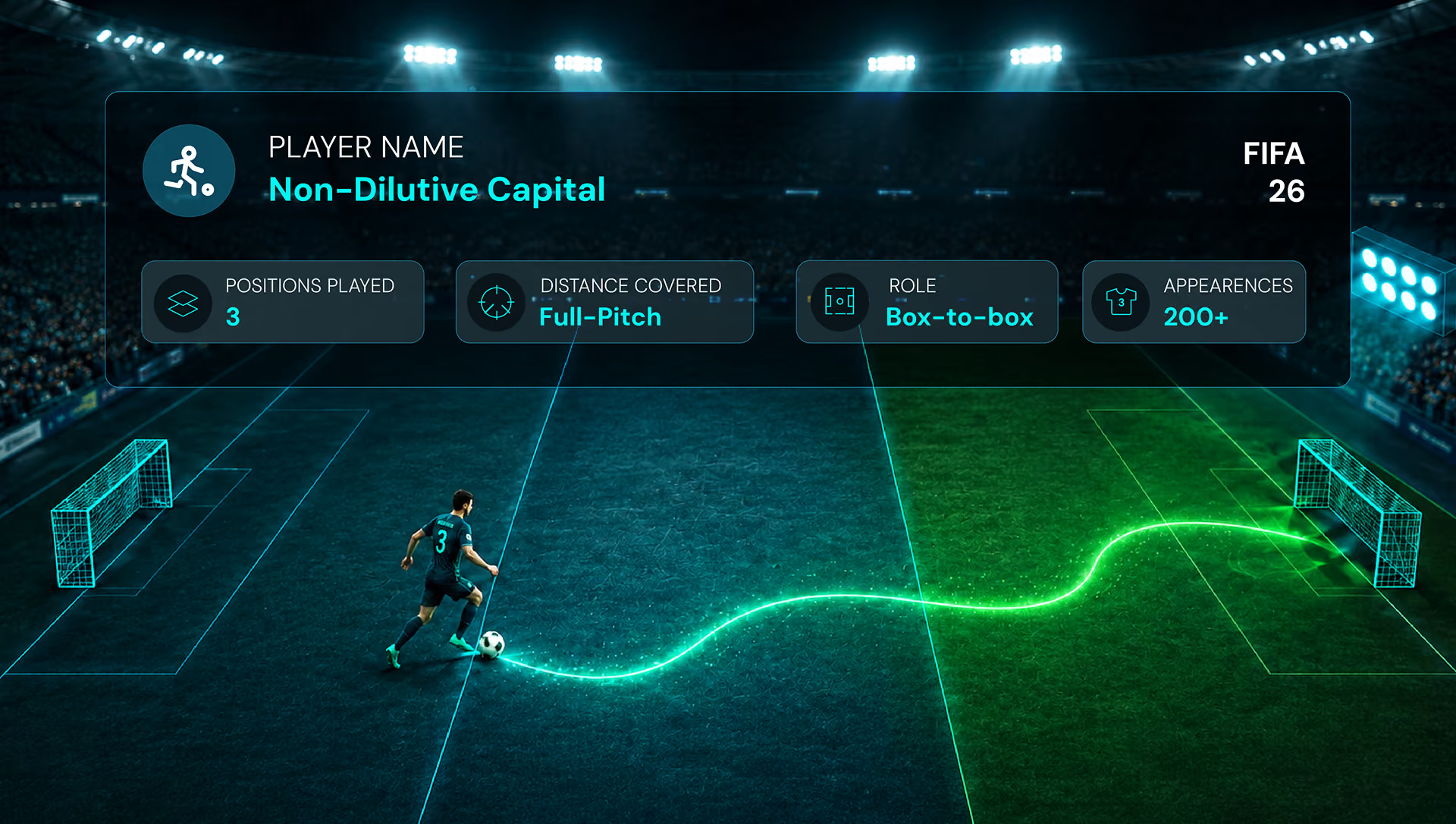
Every football team has one player who never stops running. He breaks up an attack deep in his own half, then turns up in the opposition box seconds later to finish a move. He is the box-to-box midfielder, the engine of the team, valued for one thing: he can play almost any role the game demands.
In a startup’s capital stack, that player is non-dilutive capital. It defends your ownership and funds your growth in the same breath, which is why founders reach for it to solve almost everything. But like any versatile player, it is only as good as the manager who knows where to use it. The founders who get the most from it are the ones who give it the right job at the right moment.
Why One Player Can Cover So Much Ground
It isn’t that the box-to-box player is the best defender or the best striker; it’s that he can move between the two. Three qualities make non-dilutive capital the same kind of player.
It can defend, because it never touches your equity. Repayment is an agreed fee, not a slice of your company, so it protects the ownership you would otherwise trade away. On average, founding teams hold just 25% of their company by the time they exit, and every bit of growth funded without touching your cap table keeps that number higher.
It can come on the moment the game turns, because it’s fast. Opportunities rarely wait for a three-month fundraise. An offer can land in as little as 72 hours, so it enters the game exactly when the situation demands, not several rounds later.
It travels light, which is why it can play anywhere. It asks for nothing structural: no warrants, no collateral, no board seat. Its cost is fixed and known upfront, so you can point it wherever the game needs it that week.
The Range: One Player, Three Different Jobs
A box-to-box midfielder doesn’t do one job in three places; he does genuinely different jobs in a single match. Non-dilutive capital is no different. Here are three of the jobs founders most often hand it, each with a company that put it to work.
Dropping Deep to Defend: Extending Runway
When a team is pinned back, the box-to-box midfielder drops deep into his own half to relieve the pressure and buy time to regroup.
Non-dilutive capital plays this role when the next equity round isn’t the right move yet, because the market has turned or your valuation isn’t where it should be. Instead of raising under pressure and giving away more of the company than you need to, you use it to extend your runway and reach that round from strength, not urgency.
Switch Automation, a proptech company that helps property owners cut operating costs and improve energy efficiency, did exactly that. After an earlier $17M round, its founders chose not to raise again when the market turned in 2022. They took non-dilutive financing from ECL that extended their runway and kept them growing organically, without further dilution. “The team was able to assess our case and give me a decision within a week,” says CEO Deb Noller, “and once they made the decision, we had the money almost overnight.”
Breaking Forward to Attack: Funding Sales and Marketing
When the moment is right, the same midfielder surges forward to join the attack and turn possession into goals.
This is non-dilutive capital funding growth. After product-market fit, sales and marketing become your primary levers, but scaling demand means spending ahead of the revenue it brings in. That gap is widening: the median SaaS company now takes 18 months to earn back what it spends acquiring a customer, up from 14 a year earlier, according to Benchmarkit’s 2025 SaaS Performance Metrics Report. Covering it with equity means giving away ownership for a cost that pays for itself. Non-dilutive capital lets you make the hires and open new channels without that trade.
TechGenies, a global software development and cybersecurity firm operating in more than ten countries, did exactly this. A bootstrapped business set on keeping full ownership, it used non-dilutive financing from ECL to hire a Head of Sales and a Head of Marketing Strategy, then expanded across its ten-country footprint while keeping 100% of its equity.
The Unglamorous Work: Reaching Profitability Faster
Not every contribution makes the highlight reel. The box-to-box midfielder’s hardest work is the kind no one remembers: the lung-busting sprint back forty yards to break up a counter, and the covering runs and recovery tackles that keep the team whole.
For founders, that grind is the work of reaching profitability faster, and it isn’t only about cutting costs. It’s about timing your investments so your unit economics improve rather than erode. Non-dilutive capital can fund the moves that lower long-term burn: clearing costlier debt, hiring with intent, and investing in tooling that cuts cost over time.
BigVU, a platform that lets small businesses make professional-quality video from a smartphone, faced a cashflow squeeze. Its revenue from Apple arrived on a roughly two-month delay, so the bootstrapped company leaned on costly debt to bridge the gap. Working with ECL in early 2024, it paid down that debt, smoothed its cashflow, and reached breakeven. “ECL’s financing is more fair for everyone,” says founder and CEO David Anselm. “You know what your margin and costs are and can put it in a budget.”
Build the Squad Around Him
The strongest teams are never built around a single player. A manager pairs a versatile midfielder with specialists so no one has to do everything, and capital works the same way.
In capital terms, that balance is a diversified capital stack. Equity funds the vision, the category-defining bets where the upside justifies the dilution. Non-dilutive capital funds the execution: the growth, the runway, and the efficiency work, where giving up ownership would be the most expensive way to fund it. A well-structured stack lets you control your burn, preserve equity for the moments that truly need it, and time your raises around strength rather than desperation.
The test is simple. When the path ahead is proven and you mainly need to execute, with predictable revenue to grow against and a return you can model before you deploy, non-dilutive capital is almost always the cheaper, cleaner way to fund it.
Pick the Position, Not the Player
The most capital-efficient founders aren’t the ones who lean hardest on their best player. They’re the ones who read the game, work out which position needs filling, and pick accordingly.
At Efficient Capital Labs, we’ve helped more than 250 AI and SaaS companies put non-dilutive capital to work on the jobs it’s built for. If you’re weighing where it fits in your stack, that’s a conversation worth having. Talk to us.
Related posts
.jpeg)
The Invitation
Founders who drive the future deserve capital that accelerates with them. Let’s make this the most efficient chapter of your story.