
Your AI Startup's Free Credits Are Running Out. Is Your Business Model Ready?

2 mins
TL;DR: Free cloud credits can get an AI startup through the build, but they can’t prove the business model works. Founders who start charging early, and track paid conversion, retention and cost to serve alongside sign-ups, find out whether customers will pay while they still have the runway to change course.
Why AI founders should start selling before they have to, and what the SaaS industry's history can teach us about free users, customer commitment, and sustainable growth.
At San Francisco Tech Week this year, one thing stood out to me: the number of AI founders building alongside the traditional SaaS crowd.
The energy was familiar. Entrepreneurs were building products, testing new ideas, and finding ways to bring technology to market that would have been difficult or prohibitively expensive just a few years ago.
But several conversations about go-to-market strategy revealed a pattern worth examining.
The approach was straightforward. Use AWS credits and other startup incentives to cover infrastructure costs, offer the product for free, acquire as many users as possible, and figure out monetization later.
I understand the logic. When someone else is covering your compute costs, you have an opportunity to extend your runway, experiment with pricing, and get your product into the hands of potential customers without burning through your capital.
First, credit where it's due. The startup ecosystem deserves recognition for making these resources available. Cloud providers, accelerators, investors, and other organizations have made it possible for entrepreneurs to build and innovate with a barrier to entry that continues to fall.
I'm proud to be part of a community that supports itself this way.
But there is a difference between using free resources to build a business and building a business that only works because those resources are free.
That distinction matters. And I think more founders need to consider it before the bills arrive.
1. The problem isn't free credits. It's what happens when they run out.
Cloud credits are an excellent tool for product development. They can help a founder build an MVP, test workloads, validate a technical approach, and acquire early users without immediately carrying the full cost of infrastructure.
The problem begins when founders confuse the temporary economics of building with the long-term economics of operating.
Google Cloud's startup program, for example, advertises up to $200,000 in credits for eligible early-stage startups, with additional support for qualifying AI-first companies. AWS Activate also offers substantial infrastructure credits to eligible startups.
These are meaningful benefits. They can extend a company's runway and make experimentation more accessible.
But credits have limits. And when those limits are reached, the business has to stand on its own economics.
That means paying for the infrastructure behind the product, along with everything else required to operate a company: payroll, customer support, sales, marketing, security, and the countless other expenses that don't disappear just because the product is software.
This transition is already receiving attention from the infrastructure providers themselves.
In a February 2026 interview with TechCrunch, Darren Mowry, Google's vice president of global startups, discussed the pressures facing founders as they scale. Among them was the transition from free credits to real cloud bills, alongside rising infrastructure costs and increasing pressure to demonstrate traction.
The takeaway isn't that founders should avoid credits. It's that they should understand what those credits are subsidizing.
If the credits are helping you acquire customers who will eventually pay enough to cover the cost of serving them, that's a useful investment.
If the credits are allowing you to provide a service at a price your business could never sustain, you're postponing a problem rather than solving it.
2. Your competitors are giving their products away, too.
Here's the second issue with relying on free usage as your primary go-to-market strategy.
You aren't the only founder with access to these resources.
Your competitors are using the same credits, experimenting with the same models, and trying to attract many of the same customers. They can offer free access, low introductory prices, and generous usage limits for many of the same reasons you can.
That makes free access a weak differentiator.
It also creates a potential problem for customer acquisition.
A user who signs up for your product may be signing up for two or three alternatives at the same time. They may use your platform periodically, test a competitor's features, and continue comparing options until something gives them a reason to commit.
You may see a growing number of sign-ups and assume you've established traction.
But what have you actually established?
You know someone was interested enough to try your product. You don't necessarily know whether they consider it essential, whether they would pay for it, or whether they would choose it over an alternative once all the products start charging.
Free usage demonstrates interest. Paid usage provides evidence of willingness to pay. Retention provides evidence that you're continuing to deliver value.
Those are three different signals, and founders should measure them accordingly.
3. AI has a unit economics problem that traditional SaaS didn't always have.
There is another important difference between the current AI market and the SaaS wave that preceded it.
Traditional software can be expensive to build, but the incremental cost of serving another customer is often relatively low. That helped make subscription software an attractive business model. Once the product was built, additional customers could contribute substantial recurring revenue without proportionally increasing delivery costs.
AI applications don't always behave that way.
Many AI products incur inference costs every time a customer interacts with the product. More usage can mean more revenue, but it can also mean a larger infrastructure bill.
If your pricing doesn't account for that relationship, customer adoption can make your economics worse rather than better.
In a June 2026 Business Insider report, Kylan Gibbs, CEO and co-founder of AI voice company Inworld, described the challenge facing consumer AI startups:
“Their profitability goes through the floor every time they hit success.”
Read the Business Insider article
Gibbs said some consumer AI startups spend 70% to 90% of their operating budgets on inference. The article describes a difficult situation in which engagement increases, but the cost of delivering that engagement makes profitability harder to achieve.
This is a critical distinction.
In a traditional SaaS business, increasing usage is often a welcome sign that customers are getting value from the product. In an AI business, increasing usage can be both a positive product signal and a warning about margins.
That doesn't mean AI businesses can't build attractive economics. It means founders need to understand those economics from the beginning.
If you're charging a flat monthly subscription, what happens when a customer uses ten times as many tokens as the average customer? What happens when your most engaged users are also your most expensive users to serve? What happens when you scale from a few hundred users to several thousand?
And, perhaps most importantly, what happens when the infrastructure subsidy disappears?
These are not questions to save for the next funding round.
They're questions that should influence your pricing, packaging, usage limits, and customer acquisition strategy today.
4. The SaaS industry has already taught us that free users aren't the same as paying customers.
This isn't a new lesson. The AI market is simply giving it a new set of consequences.
For years, SaaS founders have used freemium models to reduce friction, attract users, and build a pipeline of potential customers. In the right circumstances, that approach works extremely well.
But free plans can also attract users who have little intention of paying, consume support resources, and provide misleading signals about demand.
Consider the experience of Outseta, a SaaS platform serving other software businesses.
In a first-person account, co-founder Geoff Roberts described how the company accumulated more than 5,000 business users, most of them on a free plan. Supporting those users was consuming time that the small team needed for marketing and product development. Many users also had little urgency to convert.
The company decided to remove its freemium tier and require new customers to pay.
The results were instructive.
New paid subscribers increased from approximately 25 per month to 75 per month. But churn increased as well: 52 of the 180 new paid subscribers eventually left, many because the product lacked features they needed. After accounting for churn, Outseta reported that its growth rate had doubled.
Read the full Outseta case study
There are two lessons here.
First, a large free user base can consume resources without creating the commercial momentum a business needs.
Second, charging earlier is not a substitute for product-market fit.
Outseta's experiment helped the company identify serious buyers, but it also exposed customers who weren't a good fit for the product as it existed at the time.
That's exactly why founders should test willingness to pay early. It gives them time to discover what customers value, which features are missing, and whether the business model makes sense before they have built their entire strategy around free adoption.
The lesson isn't that every startup should eliminate its free tier.
It's that founders should treat pricing as something to test, not something to postpone until they feel comfortable asking for money.
5. Start selling before you need the revenue.
My advice to founders is simple: start selling now.
That doesn't mean you need a polished enterprise sales organization, a perfect product, or a twelve-month contract on day one.
It means you should begin testing whether customers will pay for the value your product delivers today.
You can do that with an early-access plan, a paid pilot, a limited commercial release, or a subscription priced to reflect the current capabilities of the product.
The important thing is to make the commercial decision part of the learning process.
If customers won't pay for your product, you need to understand why.
Is the problem not painful enough? Is the value proposition unclear? Is the product missing a critical feature? Is the pricing wrong? Are you selling to the wrong buyer?
Those are useful questions to answer while you still have credits, cash, and time to make changes.
Waiting until the credits run out to discover that customers won't pay leaves you trying to solve a product, pricing, and financing problem at the same time.
That's an avoidable position.
Don't confuse a contract with customer commitment.
There's a reason I'm a fan of getting customers to commit commercially when the value justifies it.
A customer who has integrated your product into an important workflow, trained their team to use it, and established a budget for it is in a different position from someone who signed up for free and occasionally logs in.
A twelve-month contract can reinforce that commitment when it makes sense for both parties.
But a contract alone doesn't make a product sticky. Customers can still fail to adopt it, regret the purchase, or decline to renew.
The real objective is to build a product that delivers enough ongoing value that customers have a reason to stay.
That requires more than locking someone into a term. It requires solving a meaningful problem, creating a good experience, and becoming part of how the customer operates.
Sell early, but make retention the result of value, not friction.
6. The funding bottleneck could arrive at the same time as the infrastructure bill.
There is another risk worth considering.
When credits expire, startups don't just face higher operating costs. Some will also need to raise capital to continue building and scaling.
If a large number of companies reach that point around the same time, they may be competing for investor attention with similar stories: strong early adoption, impressive usage metrics, promising technology, and a business model that has yet to demonstrate sustainable economics.
That's a much harder story to tell than one backed by paying customers, repeatable revenue, and a credible path toward break-even.
Revenue doesn't guarantee funding. A company can generate revenue and still have poor margins, weak retention, or an unattractive market. And some early-stage businesses legitimately need outside capital before they can reach meaningful revenue.
But commercial traction gives investors additional evidence.
It shows that someone has been willing to pay for the product. It creates an opportunity to measure retention, expansion, and customer acquisition costs. It helps a founder demonstrate that the business can eventually support itself rather than requiring capital simply to keep operating.
The strongest position is not necessarily to be profitable immediately. It's to understand the path to profitability and have evidence that customers will support the business along the way.
If your competitors are still trying to convert free users when you already have customers paying, renewing, and expanding, you've established a different kind of traction.
And if you can get close to break-even while others still depend on subsidies, you may have more options when the next funding decision arrives.
7. Use the credits to build your business, not to avoid testing it.
I want to be clear about something: I'm not arguing against free products, free trials, startup credits, or the organizations that make them available.
These resources are valuable. They make innovation more accessible and give founders opportunities they might not otherwise have.
Use them to develop your product. Use them to experiment with models and infrastructure. Use them to acquire customers and learn what those customers need.
But be careful about using them to subsidize the ongoing delivery of a product without understanding whether the business can support itself.
Build your pricing around the economics of delivering value, not just the temporary economics of building the product.
Measure paid conversion, retention, cost to serve, and contribution margin alongside sign-ups and engagement.
Test pricing while you still have room to experiment. If your customers are willing to pay for what you're building today, that gives you a foundation to improve the product and increase its value over time.
If they aren't, it's better to discover that while you still have the resources to do something about it.
And remember that your customers are navigating the same environment.
Just as you're benefiting from free infrastructure and AI services today, they're benefiting from free access to products like yours. When those economics change, they'll make their own decisions about what deserves a place in their budget.
The companies that survive that transition won't necessarily be the ones with the most free users. They'll be the ones that have given customers a compelling reason to pay.
The bottom line
The current AI boom has made it easier than ever to build and launch a product. That's a tremendous opportunity.
But lower barriers to entry also mean more competition, more alternatives for customers, and less reason to assume that early adoption will translate into long-term loyalty.
Free credits can help you get started. They cannot prove your business model works.
Build with the credits. Acquire customers with the credits. But start selling before you need to.
Don't wait until the bill arrives to find out whether your customers value your product enough to pay for it.
Sources and further reading
- Rebecca Bellan, TechCrunch. Google Cloud's VP for startups on reading your 'check engine light' before it's too late. February 2026. Discussion of startup infrastructure costs, cloud credits, and the pressure to demonstrate traction.
- Business Insider. An AI voice startup cuts pricing by more than 50% to help consumer startups survive. June 10, 2026. Reporting on inference costs, startup margins, and comments from Inworld CEO Kylan Gibbs.
- Geoff Roberts, Outseta. The Pricing Experiment That Doubled Outseta's Growth Rate Without Raising Prices. A first-person account of removing a freemium tier, increasing paid sign-ups, and learning from churn.
- Google Cloud. Early-stage startup program. Details of startup cloud-credit programs and eligibility.
- AWS Startups. Applying for AWS Activate credits: A step-by-step guide. An overview of cloud credits available to eligible startups.

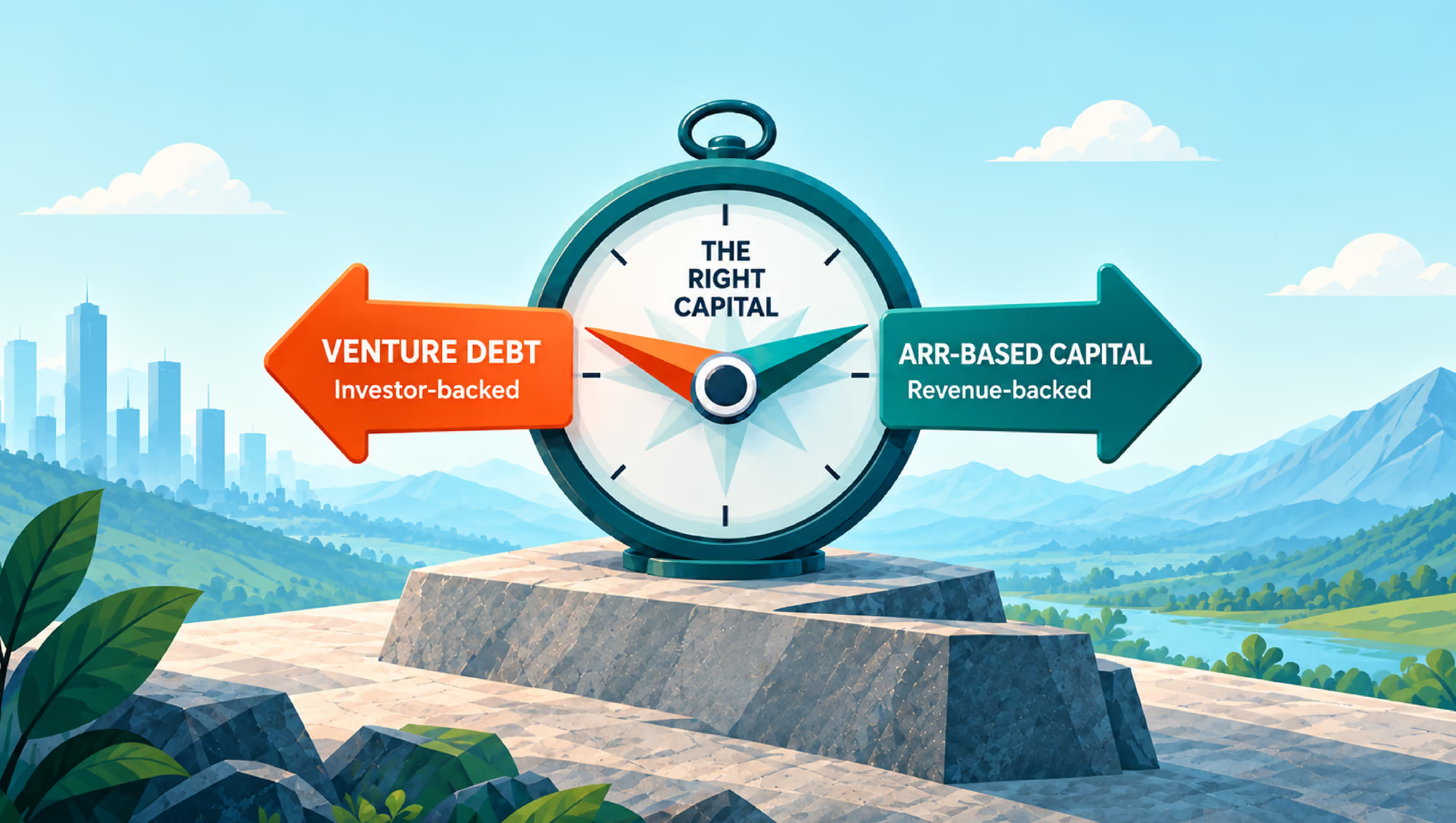
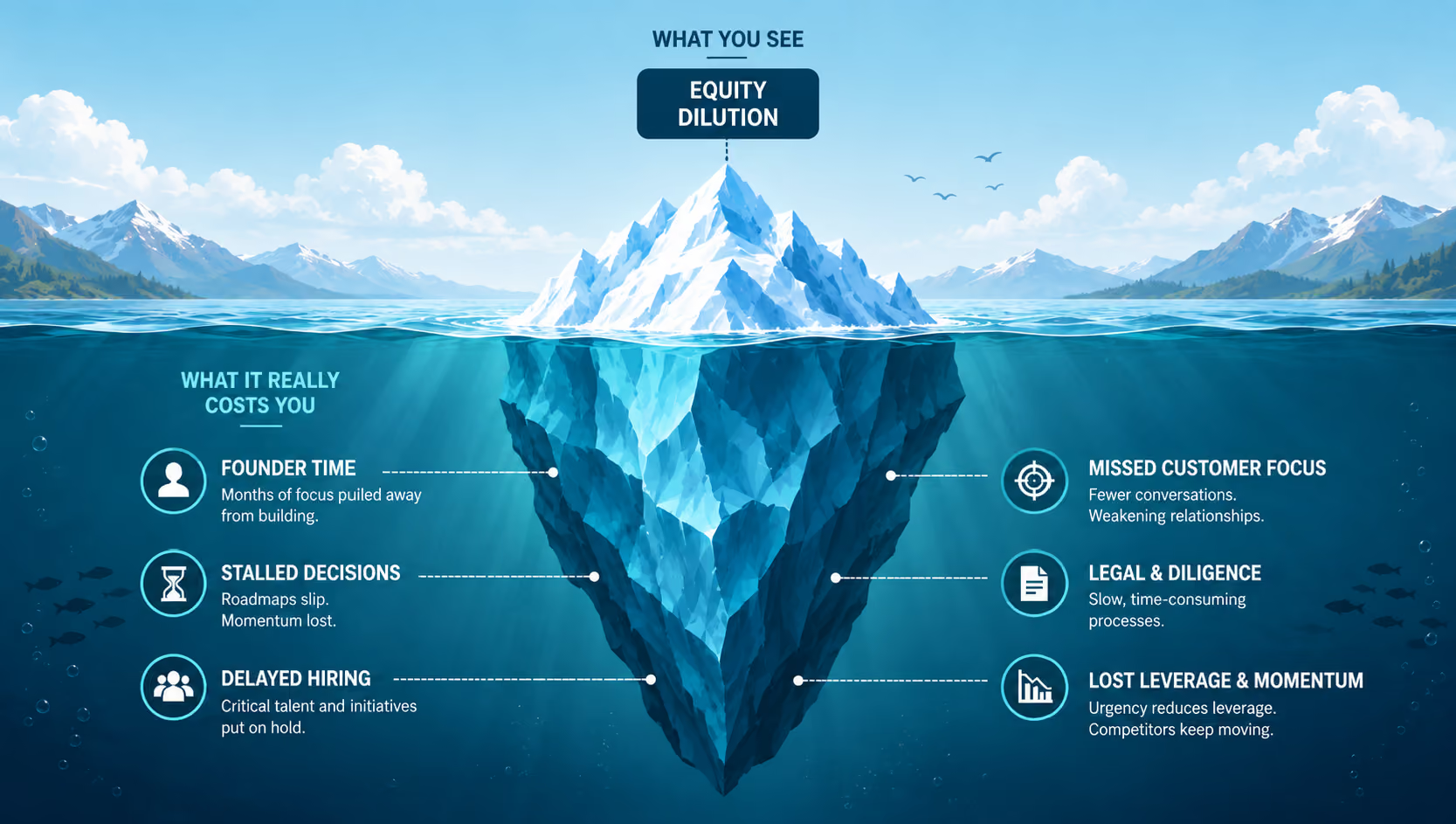

Founders who drive the future deserve capital that accelerates with them. Let’s make this the most efficient chapter of your story.