
The Hidden Cost of Raising Capital: Equity Isn’t All You Lose
2 mins
TL;DR: Chasing your next round comes with more cost than you realize. Here’s why fundraising is expensive for your startup, even before you give up equity.
As a founder, you understand the cost of giving up equity. You know that negotiating valuation, ownership, and board seats changes your cap table and your long-term leverage.
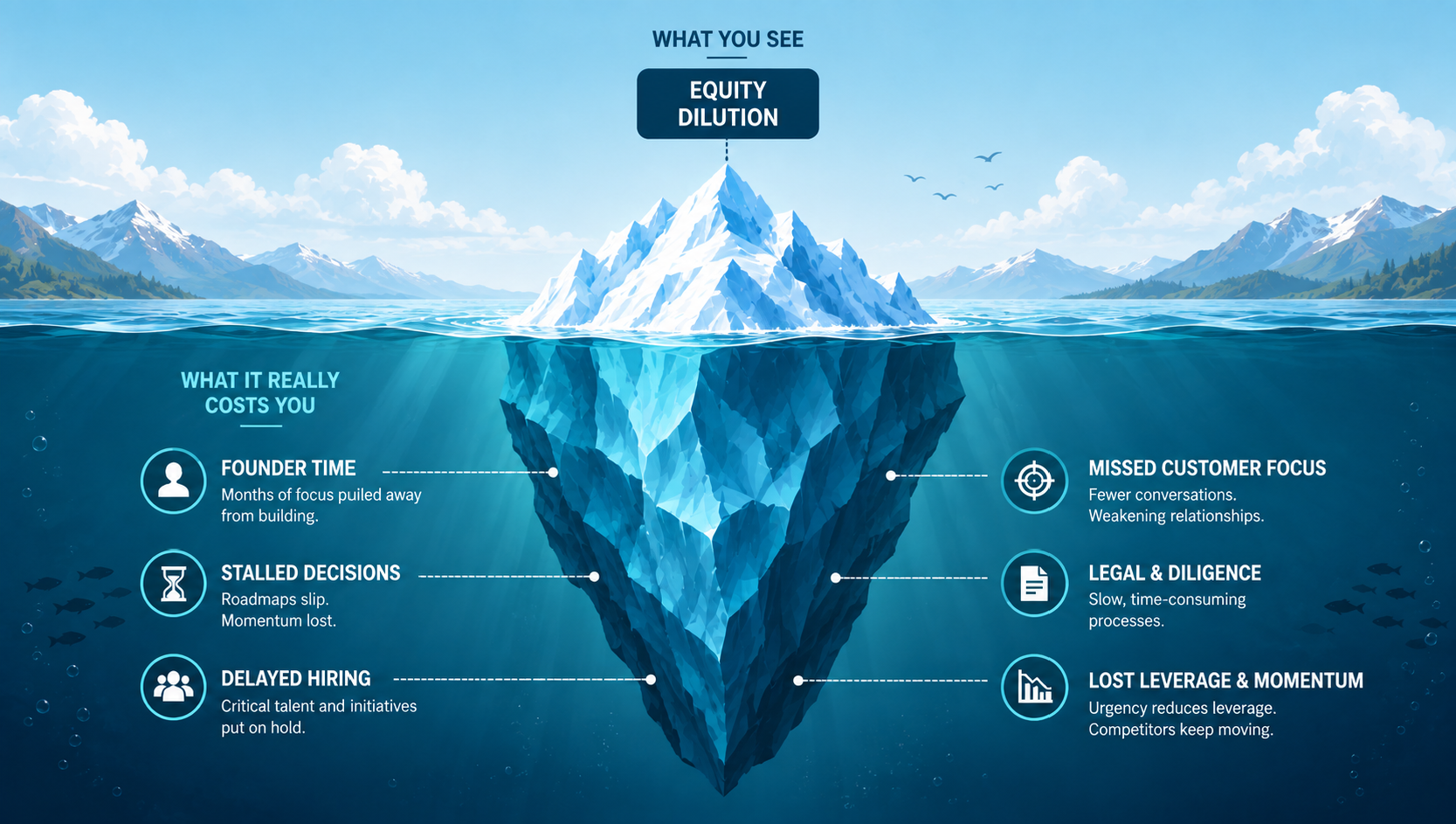
What gets less attention is everything that happens before that wire transfer hits your bank account. Fundraising demands a substantial amount of time and focus from the people who are best positioned to grow your business. For SaaS and AI founders, that opportunity cost can be just as expensive as dilution itself.
The Fundraising Process Is a Full-Time Job
A successful raise rarely happens in a few weeks. You’ll spend months refining your pitch, updating financial models, answering diligence requests, managing follow-ups, and negotiating terms. Even after securing investors, closing activities and legalities can stretch out the process even further.
Those hours have to come from somewhere—and they’re often stolen from time that should be spent talking with customers, improving the product, hiring key talent, or building partnerships. You’ll spend so much time convincing investors you can grow quickly that you’ll temporarily stall the very growth you want them to invest in.
And this is the first opportunity cost you’ll see: Every investor meeting is a customer conversation that didn’t happen and every diligence request is a feature review that got pushed back. Every week you spend updating the pitch deck and forecasting models yet again is another week your competitors are shipping features, testing new pricing models, or strengthening customer relationships.
The tradeoff becomes especially expensive for early-stage SaaS and AI companies because founders are still deeply involved in product direction, enterprise sales, recruiting, and strategic partnerships. Unlike mature orgs with layers and layers of management, most startups can’t delegate fundraising prep without creating gaps elsewhere.
Organization-Wide Execution Slows to a Crawl
Even in SaaS and AI, execution goes far beyond shipping product. Execution is the ability to consistently make decisions, hire talent, launch initiatives, and respond to customers without unnecessary delays.
And speed is an advantage in the software industry. Markets move quickly and customer expectations move right along with them. AI companies need to maintain an even faster pace as new models, infrastructure improvements, and customer use cases are emerging almost weekly.
Shifting your attention toward fundraising means taking your eyes off the product roadmap. Customer feedback may sit there longer before being acted on, and important technical decisions are often tabled until leadership has time to weigh in. If your engineering team needs to support due diligence efforts, they’ll also be pulled away from deep product work.
Bottlenecks quickly start showing up in other departments too. Headcount increases and new marketing and sales campaigns get put on hold until there’s greater financial certainty. Before long, the business shifts from growth mode to a preservation mindset. Teams become hesitant to make decisions because they lack clarity around budgets, priorities, and timelines. “Let’s revisit this after the raise” becomes the default response instead of pushing initiatives through.
In the moment, none of these delays may seem significant on their own, and they can be hard to quantify. But taken together and stretched over months, they cost you dearly. Decisions stack up and opportunities pass. When the round finally closes, you have to focus on regaining momentum rather than building on it. And the longer funding takes, the heavier that lift feels.
You Lose Leverage When Capital Becomes Urgent
Timing often isn’t talked about in fundraising conversations—but it should be.
When runway is short, you have fewer options. You may feel pressured to accept terms you would have negotiated differently six months earlier. But your timelines are compressed, so leverage shifts in the investors’ favor and decisions get made based on necessity rather than strategy.
The cost here can be immeasurable: Fundraising against the clock will lead you to giving up board seats, long-term leverage, and early equity—all of which compromise your influence, impact, and eventual exit strategy. This isn’t a position you want to put yourself in.
Fundraising and Growth Financing Serve Different Purposes
A reminder as you think through growth strategies: Not every business challenge requires another equity round.
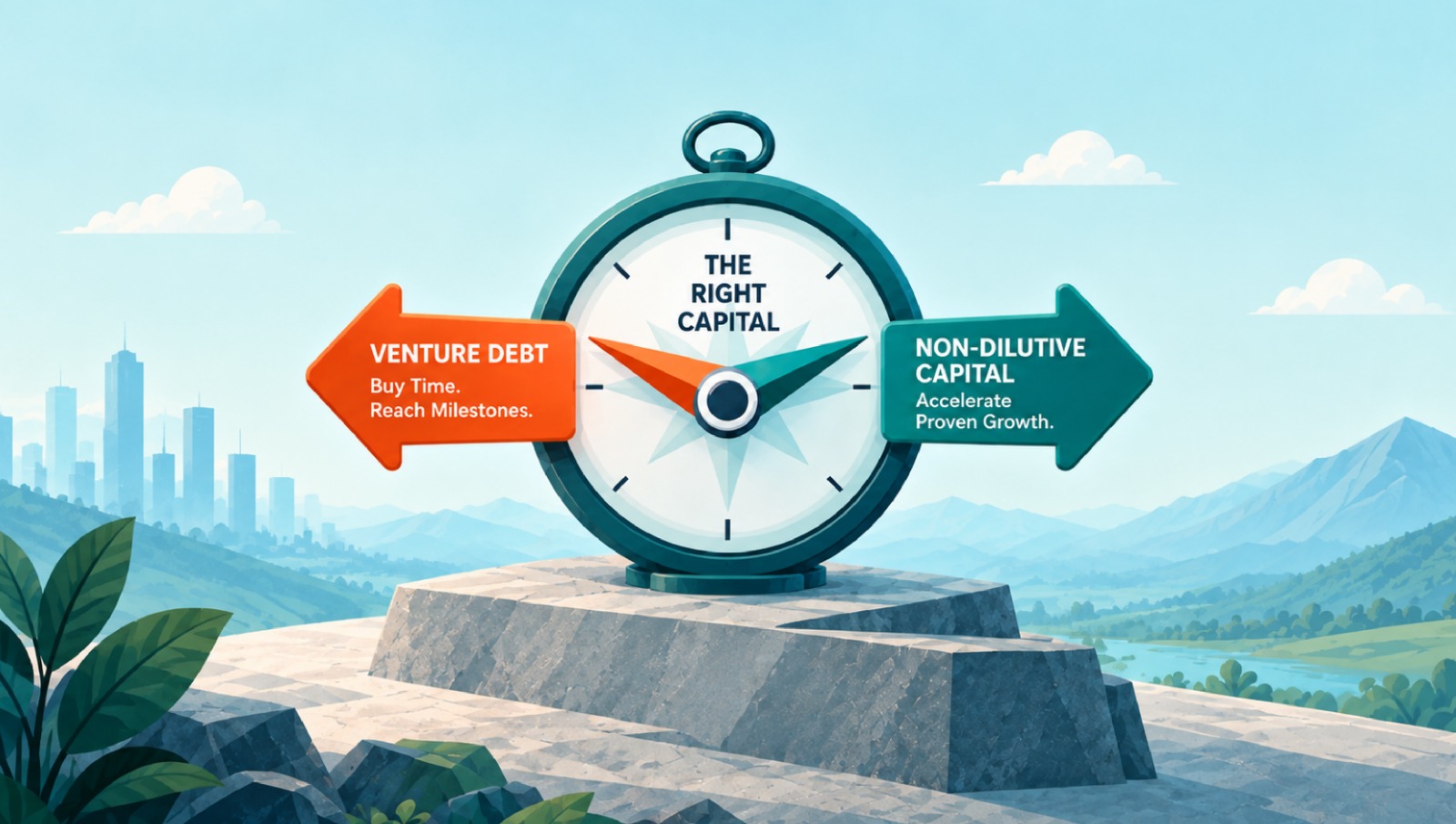
Fundraising can be the right choice when you’re making long-term bets, entering new markets, or building products long before predictable revenue exists. But if your business already has recurring revenue and a repeatable growth engine, spending months raising equity may not be the most effective way to fund your next stage of growth.
Non-dilutive financing gives you the resources to invest in hiring, product development, infrastructure, and go-to-market initiatives without shifting focus for months at a time or sacrificing your hard-earned equity.
The distinction between fundraising and non-dilutive financing becomes clearer when you think about what you’re actually funding: If you’re investing in uncertainty, fundraising might be the right fit because investors will share that long-term risk with you. If you’re investing in more of what’s already proven, non-dilutive capital can give you the runway you need without requiring a roadshow.
Momentum Is One of Your Most Valuable Assets
You already know that momentum compounds—every new hire expands capacity and every customer win creates more revenue and referrals. So why are you letting fundraising interrupt that lifecycle? If you could finance growth without raising another round, would you?
Capital should create momentum, not interrupt it. The best financing strategy is the one that extends runway while accelerating execution, pure and simple. Preserving equity is valuable, but preserving your momentum may be even more important.
So before you raise another round, pause and ask yourself: Is raising another round the right call, or is there a more effective way to fund growth right now?
Learn more about non-dilutive financing for SaaS and AI startups

.jpeg)

Founders who drive the future deserve capital that accelerates with them. Let’s make this the most efficient chapter of your story.